Lotus Cars is a British manufacturer of sports and racing cars based at the former site of RAF Hethel, a World War II airfield in Norfolk. The company designs and builds race and production automobiles of light weight and fine handling characteristics.
Lotus is owned by Proton who took over after the bankruptcy of former owner Romano Artioli in 1994.
The company was formed as Lotus Engineering Ltd. by engineer Colin Chapman, a graduate of University College, London, in 1952. The first factory was in old stables behind the Railway Hotel in Hornsey, North London. Team Lotus, which was split off from Lotus Engineering in 1954, was active and competitive in Formula One racing from 1958 to 1994. The Lotus Group of Companies was formed in 1959. This was made up of Lotus Cars Limited and Lotus Components Limited which focused on road cars and customer competition car production respectively. Lotus Components Limited became Lotus Racing Limited in 1971 but the newly renamed entity ceased operation in the same year.
The company moved to a purpose built factory at Cheshunt in 1959 and since 1966 the company has occupied a modern factory and road test facility at Hethel, near Wymondham. This site is the former RAF Hethel base and the test track uses sections of the old runway.
Chapman died of a heart attack in 1982 at the age of 54, having begun life an innkeeper's son and ended a multi-millionaire industrialist in post-war Britain. The car maker built tens of thousands of successful racing and road cars and won the Formula One World Championship seven times. At the time of his death he was linked with the DeLorean scandal over the use of government subsidies for the production of the DeLorean DMC-12 for which Lotus had designed the chassis.
In 1986, the company was bought by General Motors. On 27 August 1993, GM sold the company, for £30 million, to A.C.B.N. Holdings S.A. of Luxembourg, a company controlled by Italian businessman Romano Artioli, who also owned Bugatti Automobili SpA. In 1996, a majority share in Lotus was sold to Perusahaan Otomobil Nasional Bhd (Proton), a Malaysian car company listed on the Kuala Lumpur Stock Exchange.
The company also acts as an engineering consultancy, providing engineering development—particularly of suspension—for other car manufacturers. The lesser known Powertrain department is responsible for the design and development of the 4-cylinder Ecotec engine found in many of GM's Vauxhall, Opel, Saab, Chevrolet and Saturn cars. Today, the current Lotus Elise and Exige models use the 1.8L VVTL-i I4 from Toyota's late Celica GT-S and the Matrix XRS.
The company is organised as Group Lotus, which is divided into Lotus Cars and Lotus Engineering.
Michael Kimberley took over as Acting Chief Executive Officer of the Company and its Group from May 2006. He currently chairs the Executive Committee of Lotus Group International Limited ("LGIL") established in February 2006, with Syed Zainal Abidin (Managing Director of Proton Holdings Berhad) and Badrul Feisal (non-executive director of Proton Holdings Berhad). LGIL is the holding company of Lotus Group Plc.
Kimberley retired as CEO on 17 July 2009 and was replaced as CEO by Dany T Bahar on 1 October 2009. Bahar was formerly Senior Vice President, Commercial & Brand for Ferrari SpA where he was responsible for worldwide road car sales and after sales business, overall road car and F1 marketing activities, licensing, and merchandising business.
The four letters in the middle of the logo stand for the initials of Anthony Colin Bruce Chapman.
Current Lotus models include:
- Lotus Elise: The Elise started in 1996 and weighed 725 kg. The current model starts at 901 kg and incorporates some engineering innovations, such as an aluminium extrusion frame and a composite body shell. The Elise has also spawned several racing variants, including a limited series called the 340R, which has an open-body design echoing the old Seven. The Elise was introduced into the U.S., with a Toyota engine, in order to pass strict U.S. emissions laws. The 1ZZ & 2ZZ Toyota engines used have a Lotus ECU with their own fuel mapping. The supercharged Lotus SC and limited edition Jim Clark Type 25 Elise editions add a new performance dimension to the Elise range. 0–60 mph acceleration is in 4.3 seconds and 0–100 km/h in 4.6 seconds.
- Lotus Exige: A version of the Elise with a redesigned body to provide additional downforce (100 lb at 100 mph). Additionally, the following Elise Sport Pack and Hardtop options are standard on the Exige. The car is street legal and the base 2006 model was available in the USA for $50,990. Lotus updated the Exige with the supercharged Exige S in 2007.
- Lotus Exige S: An Exige with a supercharged engine providing 220 hp. The non-S Exige and Elise have 190 hp (140 kW).
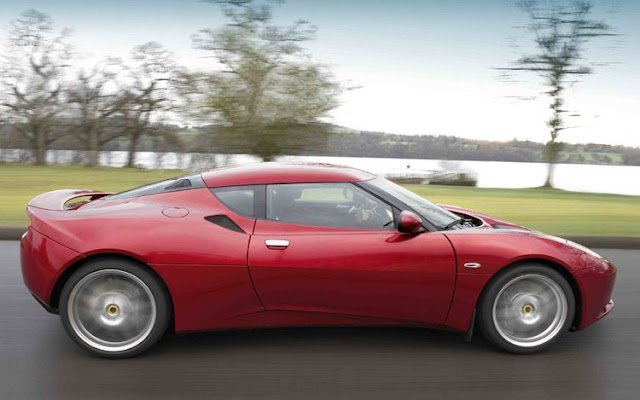
- Lotus Evora Launched 22 July 2008. Code named Project Eagle during development. A 2+2 sports car with a mid mounted, transverse 3.5 litre V6 engine.
- Lotus 2-Eleven Weighing just 670 kg (1,500 lb) and with 252 bhp (188 kW) the Lotus 2-Eleven can sprint from 0–60 in 3.8 seconds and has a top speed of 155 mph (249 km/h). Intended as a track day car it costs £39,995 but for an additional £1,100 Lotus will make the car fully road legal.
- Lotus T125 Exos Track-only Formula 1 inspired car. 3.5l Cosworth V8, 640 bhp; 25 will be built at $1 million each. To run in the 'Exos Experience by Lotus', a club, initiated and operated by Lotus Motorsport, in which a limited number of owner drivers can refine their driving skills and challenge themselves with expert one-to-one advice from former Grand Prix drivers and trainers.
Lotus Mark I (1948): Austin 7 based car
Lotus Mark II (1949–1950): Ford-powered trials car
Lotus Mark III (1951): 750 cc formula car
Lotus Mark IV (1952): Trials car
Lotus Mark V (1952 2): 750 cc formula car—never built
Lotus Mark VI (1953–1955): The first "production" racer—about 100 built
Lotus Seven (1957–1970): Classic open sports car, a minimalist machine designed to manoeuvre a racing circuit and nothing else. The rights to the Seven were sold in 1973 to Caterham Cars, who continue to produce it today. Updated versions of this 1957 design are also produced by other speciality firms, including Westfield Sportscars and Donkervoort. Originally the number seven was applied to a Riley-powered Formula 2 car, but the vehicle was never completed in its original form, finally emerging instead as the Clairmonte Special, a two-seat sports car powered by a Lea-Francis engine.
Lotus Mark VIII (1954): sports racer
Lotus Mark IX (1955): sports racer, based on Eight
Lotus Mark X (1955): sports racer, a more powerful Eight
Lotus Eleven (1956–1957): sports racer
Lotus 12 (1956–1957): Formula Two and Formula One racecar
Lotus 13: Designation not used
Lotus 14 (1957–1963): First production street car—the Elite
Lotus 15 (1958): Sports racer—successor to the Eleven
Lotus 16 (1958–1959): F1/F2 car based on the Twelve
Lotus 17 (1959): Sports racer update of the 15—not successful
Lotus 18 (1960–1961): First mid-engined Lotus single seater—Formula Junior/F2/F1
Lotus 19 (1960–1962): Mid-engined sports racer—"Monte Carlo"
Lotus 20 (1961): Formula Junior
Lotus 21 (1961): Formula One
Lotus 22 (1962–1965): Formula Junior/F3
Lotus 23 (1962–1966): Small displacement mid-engined sports racer
Lotus 24 (1962): Formula One
Lotus 25 (1962–1964): Formula One World Champion
Lotus 26 (1962–1971): Production street sports car—the original Elan.
Lotus 27 (1963): Formula Junior
Lotus 28 (1963–1966): Lotus version of the Ford Cortina street/racer
Lotus 29 (1963): Indy car—Ford stock block
Lotus 30 (1964): Large displacement sports racer (Ford V8)
Lotus 31 (1964–1966): Formula Three space frame racer
Lotus 32 (1964–1965): Monocoque F2 and Tasman Cup racer
Lotus 33 (1964–1965): Formula One World Champion
Lotus 34 (1964): Indy car—DOHC Ford
Lotus 35 (1965): F2/F3/FB
Lotus 36 (1965–1968): Fixed Head Coupe version of the original Elan, so called perhaps to distinguish it from the Type 26 Elan which could be fitted with a removable hard top)
Lotus 38 (1965): Indy winning mid-engined car
Lotus 39 (1965–1966): Tasman Cup formula car
Lotus 40 (1965): Improved(?) version of the 30
Lotus 41 (1965–1968): Formula Three, Formula Two, Formula B
Lotus 42 (1967): Indy car—raced with Ford V8
Lotus 43 (1966): Formula One
Lotus 44 (1967): Formula Two
Lotus 45 (1966–1974): Convertible (Drop Head Coupe), a version of the original Elan with a revised body style, most notable for its permanent side window frames.
Lotus 46 (1966–1968): Original Renault-engined Europa
Lotus 47 (1966–1970): Racing version of Europa
Lotus 48 (1967): Formula Two
Lotus 49 (1967–1969): Formula One World Champion
Lotus 50 (1967–1974): Four-seat "Elan +2" production car
Lotus 51 (1967–1969): Formula Ford
Lotus 52 (1968): Prototype "Europa" twincam
Lotus 53 (1968): Small displacement sports racer—never built
Lotus 54 (1968–1970): Series 2 "Europa" production car.
Lotus 55 (1968): F3
Lotus 56 (1968–1971): Indy turbine wedge/F1 turbine (56B)
Lotus 57 (1968): F2 design study
Lotus 58 (1968): F1 design study
Lotus 59 (1969–1970): F2/F3/Formula Ford
Lotus 60 (1970–1973): Greatly modified version of the Seven—AKA Seven S4
Lotus 61 (1969): Formula Ford wedge
Lotus 62 (1969): prototype Europa racer
Lotus 63 (1969): 4-wheel drive F1
Lotus 64 (1969): 4-wheel drive Indy cars—did not compete
Lotus 65 (1969–1971): "Federalized" Europa S2
Lotus 66: designation not used
Lotus 67 (1970): Proposed Tasman Cup car—never built
Lotus 68 (1969): F5000 prototype
Lotus 69 (1970): F2/F3/Formula Ford
Lotus 70 (1970): F5000/Formula A
Lotus 71: Undisclosed design study
Lotus 72 (1970–1972): Formula One World Champion
Lotus 73 (1972–1973): F3
Lotus 74 (1971–1975): Europa Twin Cam production cars
Lotus 75 (1974–1982): Luxury 4 seat GT—"Elite II"
Lotus 76 (1975–1982): Fastback version of Elite II—"Éclat S1"—also 1974 F1
Lotus 77 (1976): F1
Lotus 78 (1977–1978): F1 ground effects car
Lotus 79 (1978–1979): Formula One World Champion—also street GT "Esprit" (1975–1980)
Lotus 80 (1979): F1
Lotus 81 (1980–1981): F1—designation also used for Sunbeam Talbot rally car
Lotus 82 (1982–1987): Turbo Esprit street GT car
Lotus 83 (1980): Elite series 2
Lotus 84 (1980–1982): Éclat series 2
Lotus 85 (1980–1987): Esprit series 3
Lotus 86 (1980–1983): F1 dual chassis—never raced
Lotus 87 (1980–1982): F1
Lotus 88 (1981): F1 dual chassis car—banned
Lotus 89 (1982–1992): Lotus Excel GT—re-engineered Éclat
Lotus 90: Unreleased Elan/Toyota
Lotus 91 (1982): F1
Lotus 92 (1983): F1
Lotus 93T (1983): F1 Turbo
Lotus 94T (1983): F1 Turbo
Lotus 95T (1984): F1 Turbo
Lotus 96T (1984): Indy car project—abandoned
Lotus 97T (1985–1986): F1 Turbo
Lotus 98T (1986–1987): F1 Turbo
Lotus 99T (1987): F1 Turbo—last Lotus F1 winner
Lotus 100T (1988): F1 Turbo
Lotus Elan (Type M100) (1989–1995): Front-drive convertible Elan.
Lotus 101 (1989): F1
Lotus 102 (1990–1991): F1
Lotus 103 (1990): F1—not produced
Lotus 104 (1990–1992): Lotus Carlton: tuned version of the standard Vauxhall saloon.
Lotus 105 (1990): Racing X180R IMSA Supercars Drivers Champ Doc Bundy
Lotus 106 (1991): X180R roadgoing homologation special
Lotus 107 (1992–1994): F1
Lotus 108 (1992): a bicycle ridden by Chris Boardman to win a gold medal at the 1992 Barcelona Olympics, also known as the "LotusSport Pursuit Bicycle".
Lotus 109 (1994): F1—Last Lotus F1 car.
Lotus 110: Production version of type 108 bicycle
Lotus 111: The Lotus Elise
Lotus 112: Final partial F1 design, got as far as the monocoque buck
Lotus 113: Number not allocated
Lotus 114 (1996): Lotus Esprit GT1
Lotus 115 (1997–1998): Lotus GT Race Car, AKA Lotus Elise GT1
Lotus 116: The Vauxhall VX220 / Opel Speedster, a collaboration with GM
Lotus 117: Lotus Elise Mk2
Lotus 118: Lotus M250. Two-seater concept car. Unveiled in Autumn of 1999 as a mid-range sports car, project was cancelled in 2001.
Lotus 119: Soapbox derby car Light vehicle out of carbon and aluminium, brakes discs, without engine, built for the race of the festival of speed of Goodwood
Lotus 120 (1998): Elise V6 code named M120—was never produced
Lotus 121 (2006): Europa S
Lotus 122: Lotus Evora
Lotus 123: Lotus 2-Eleven
Lotus 124: Evora Race Car
Lotus 125: Exos—Ultimate track Car
Lotus Excel (1985–1992): Updated Eclat with Toyota running gear. 2,159 Excels were made.
Lotus Eclat (1975–1982): Fastback version of the Elite. The rear roof line of the Elite was sloped down into a sporty fastback.
Lotus Elite: Describes two cars, one an ultra-light two-seater coupé produced from 1957 to 1962, one an angular 3-door hatch with a back bone chassis produced from 1974 to 1982.
Lotus Europa (1966–1975): mid-engine sports car.
Lotus Esprit: A mid-engined sports car, launched in the early 1970s. It was styled by Italian designer Giorgetto Giugiaro. The Esprit started with a light, 4-cylinder design, which went through several iterations of turbo-charging and electronic upgrades, before finally being replaced by a highly advanced V8. The last Lotus Esprit rolled off the production line on 20 February 2004, after 28 years in production. A total of 10,675 Esprits were built since production began in 1976.
Lotus M250 (2000): Concept car that never reached production
Lotus Europa S: The Grand Tourer (GT)-inspired two-seater is claimed to offer a more upmarket sportscar experience, although it is based on the same chassis as the Elise and Exige, limiting accommodation and practicality. Power comes from a Lotus-tuned variant of the turbocharged four-cylinder engine which powers the VX220. The Europa has been criticised in the motoring press for being expensive and for lacking equipment and practicality compared to rivals like the Porsche Cayman.
At the 2010 Paris Motorshow, Lotus announced five new models to be introduced over the next five years:
New Lotus Esprit. Due to be released in 2013, the Esprit will be powered by a 4.8 litre Lotus Performance V8 pressure charged engine delivering up to 620 PS, capable of 0–100 km/h in approximately 3.4 seconds.
New Lotus Elan. Set for release during the second half of 2017, the Elan will feature a 4.0 litre V6 pressure charged engine capable of delivering up to 450 PS with a weight of 1,295 kg.It has been confirmed that the Elan has been shelved
New Lotus Elite. A 2+2 GT with a front-mid positioned 5.0 litre V8 engine delivering up to 620 PS, capable of 0–100 km/h in approximately 3.7 seconds. Set for release in spring 2014,
New Lotus Elise. The replacement for the Lotus Elise is due in 2015 with a 2.0 litre inline 4 pressure charged engine delivering up to 320 PS, the Elise 2015 is stated to be capable of 0–100 km/h in under 4.5 seconds.
New Lotus Eterne. A four door, four seater sports GT. With a 5.0 litre pressure charged V8. Designed as a competitor to the Porsche Panamera and the Aston Martin Rapide.
2011 Lotus Elise
Lotus Evora
2011 Lotus
2011 Lotus